Showing posts with label dr. Show all posts

Saturday, 10 August 2013

Amazing Onion.


A friend of mine told me a story about when he was a kid he was in the hospital & nearly dying. His grandmother came to the hospital & told a family member to go buy her a large onion & a new pair of white cotton socks. She sliced the onion open then put a slice on the bottom of each of his feet & put the white cotton socks on him. In the morning when he awoke they removed the socks. The slices of onion were black & his fever was gone. The following story that someone sent to me might have some truth in it & we are going to try it this winter. 
In 1919 when the flu killed 40 million people there was this Doctor that visited the many farmers to see if he could help them combat the flu. Many of the farmers and their family had contracted it and many died. 
The doctor came upon this one farmer and to his surprise, everyone was very healthy. When the doctor asked what the farmer was doing that was different the wife replied that she had placed an unpeeled onion in a dish in the rooms of the home, (probably only two rooms back then). The doctor couldn't believe it and asked if he could have one of the onions and place it under the microscope. She gave him one and when he did this, he did find the flu virus in the onion. It obviously absorbed the bacteria, therefore, keeping the family healthy. 
Now, I heard this story from my hairdresser in AZ. She said that several years ago many of her employees were coming down with the flu and so were many of her customers. The next year she placed several bowls with onions around in her shop. To her surprise, none of her staff got sick. It must work.. (And no, she is not in the onion business.) 
The moral of the story is, buy some onions and place them in bowls around your home. If you work at a desk, place one or two in your office or under your desk or even on top somewhere. Try it and see what happens. We did it last year and we never got the flu. 

For flu cure:
Cut both ends off an onion put one end on a fork and then place the forked end into an empty jar... Placing the jar next to the sick patient at night. It said the onion would be black in the morning from the germs... Sure enough it happened just like that... The onion was a mess and I began to feel better. 
Onions and garlic placed around the room saved many from the black plague years ago. They have powerful antibacterial, antiseptic properties. 
One more thing, never store cut onions and consume the next day.

Thursday, 1 August 2013

What You Need to Know about Hepatitis C


What You Need to Know about Hepatitis C

Living with Hepatitis C: Personal Stories

Wanda:

"I need to stay healthy, because I have two little girls and they keep me busy! I had a biopsy and my doctor says my liver is doing okay. So far, so good..." "... but I worry about my family. Sometimes I let my kids drink from my glass, or I forget to cover my mouth when I cough. Could that give them hepatitis C? And what about my partner? Can you get hepatitis C through sex?"
Hepatitis C is not spread through casual contact like coughing, sharing cups or eating utensils, hugging, or kissing. Hepatitis C is only spread through contact with infected blood. The most common ways that hepatitis C is spread are:
  • sharing needles and other equipment (" works") used to inject drugs or other substances
  • mother to baby during birth
  • accidental needle-stick injuries, mainly to health care workers on the job
  • sex without using a condom (this is a rare way to get hepatitis C, but it does happen)
It may also be possible to spread hepatitis C through:
  • sharing razors, toothbrushes, or nail clippers with a person who has hepatitis C (because these items may have traces of blood on them)
  • tattoos or piercing, especially if it is not done by a professional with sterile equipment
A woman can pass hepatitis C to her baby during birth. About 5 out of 100 babies born to women with hepatitis C will be infected. Talk to your child's doctor about when to test your child for hepatitis C.
Before 1992, people also got hepatitis C through infected blood transfusions and organ transplants. Now, all blood and organ donations are tested for hepatitis C, so it is safe to get blood or organs.
It is possible to spread hepatitis C during sex, but this is rare. On the other hand, HIV and other STDs (sexually transmitted diseases) are easily spread during sex. Always use condoms to protect yourself and your partners.

Keeping your loved ones safe

Hepatitis C is spread through blood. To avoid giving hepatitis C to others:
  • do not share needles, syringes, or other injection equipment (" works")
  • do not share razors, toothbrushes, nail clippers, or other household items that could have blood on them
  • clean up blood spills right away with bleach
  • keep cuts or sores covered with a bandage

Carlos:

"When I found out that I had hepatitis C, I was really angry. I worked so hard to get off drugs and was just starting to get my life together. Then they told me I had this disease. I couldn't believe it. I didn't go back to the doctor for a while - I didn't want to deal with it.
Later I realized it wasn't going to just go away. I want to stay as healthy as I can. Is there is a treatment for hepatitis C?"
You are not alone. Dealing with recovery and hepatitis C can be stressful. It may help to know that there are many other people in the same situation. Ask your doctor, counselor, or case manager about support groups for people in recovery who have hepatitis C.
There is a treatment for hepatitis C, but it does not work for everybody. The treatment is a combination of two medicines: pegylated interferon and ribavirin. Pegylated interferon is injected under the skin (like a shot) once a week. Ribavirin is a pill that you swallow. Treatment usually lasts for 12 months; sometimes it is shorter.
Hepatitis C treatment does not work for everyone:
  • About half of people treated with pegylated interferon and ribavirin have healthier livers and no hepatitis C in their bodies at the end of treatment.
  • Some people's livers get healthier during treatment, but the hepatitis C is not completely removed from their bodies. They may still have liver damage from hepatitis C in the future.

"I'm also in a methadone program. Will I have to stop taking methadone if I want treatment for hepatitis C?"

No. You can be treated for hepatitis C while you are on methadone.

Michael:

"My doctor says I should think about getting pegylated interferon and ribavirin treatment for my hep C. She says it has a good chance of helping my liver.
But I've heard that interferon has side effects that really mess you up. I have HIV, and when I started taking HIV medicines, I felt sick all day long. My doctor changed my HIV treatment, and I feel okay now, but I don't know if I want to deal with side effects like that again.

What are the side effects of hepatitis C treatment? Do most people get them?"

Pegylated interferon and ribavirin are strong drugs. Many people treated with them get side effects like:
  • flu-like symptoms (fever, chills, headache, muscle pain)
  • feeling very tired (fatigue)
  • mood changes (depression, bad temper)
  • temporary hair loss
  • anemia (reduced red blood cells)
Some people have mild or no side effects. Some people have very severe side effects. For many people, the side effects become less severe over time.

"I don't know if I'm ready for all that. Do I have to start treatment for hepatitis C right away?"

This is not an easy question. There are good reasons to delay treatment - and good reasons to start treatment sooner:
Reasons to delay hepatitis C treatment
  • Side effects from interferon and ribavirin could make you sick.
  • Better treatments may be available in the future.
  • Your hepatitis might not get worse— some people never have serious liver problems.
Reasons to start hepatitis C treatment sooner
  • Treatment might not work as well later.
  • Your hepatitis C could get worse very fast.
  • If your liver gets too badly damaged, you might need a liver transplant.
When and how to treat your hepatitis C is a hard decision. Family needs, side effects, work, substance use, health issues, and many other parts of your life will affect your choice. Your doctor or nurse can help you look at all of the factors to decide what is best for you.

Depression is a common side effect

Severe depression can happen to anyone who is taking interferon. It is more likely in people who have a history of depression or other mental illness. If you have a history of any mental illness or substance use/abuse, tell your doctor before you begin treatment with any type of interferon. Your doctor may suggest that you start anti-depressant medicine or see a psychiatrist before you begin your hepatitis C treatment. Your doctor can also refer you to support services like hotlines or counseling so that if you do have mood changes, you can get help right away.

 http://www.health.ny.gov/publications/1801/stories.htm

Friday, 19 July 2013

Detox Foot Spa (Bath) Is a SCAM and HOAX!


Detox Foot Spa (Bath) Is a SCAM and HOAX!
Here's Why..


I have received several emails from our clients and newsletter subscribers regarding “detox foot spa” and its results. So now, reading this article will guide you to the right path.
Detox foot spa machines are sold in several common names including: Detox Foot Bath, Foot Detox Spa, Aqua Detox, Ionic Detox Foot Bath, Detoxification Foot Spa, Energizer Detox, Cell Spa Foot Detox, Chi Detox, Bio Detox, Water Detox, and Energetic Foot Bath.


You may have seen pictures similar to the above. Many manufacturers and practitioners claim that it removes toxic matter in the body by soaking your feet in an aqua tub. The treatment is normally given by soaking your feet in water with salt added to aid the conductivity of the water. Then, low electrical current is transmitted through two electrodes.
They claim that water turning reddish brown is the toxic matter removed from the body. Depending on the color, they claim that yellowish color is from the kidney and bladder toxins, orange is from arthritis-related illness, dark brown is from liver-related diseases, and so on. Scientifically, these claims are 100% nonsensical!
Here's what really happens. The color of water changes due to a process called “electrolysis”. The brown toxins you see are from the rust generated by the corrosion of the iron electrodes! The different variations in color can be accounted by varying amount of salt added to the water and variations in the compositions of the electrodes. The color of water will change with or without soaking your feet in it.
Dialysis results from several sources also show that the brown stuff that appears in the bathwater is iron-based, and that the bathwater showed no sign of urea or creatinine, supporting the fact that detoxification does not apply.  

In fact, some marketers admitted this and opted in emphasizing “energy balance” in their sales pitches. They also use pseudoscience of toxins, bio-energy, bio-stimulation, cellular energy, and other science jargons to mislead people.
Also, among many commercialized detox foot spa machines, they claim that their machines create negative ions in the water that revitalize the dead cells and organs in the body. There is no definite proof that water can be ionized properly. Ionized water may supposedly mean that the water is ionized, although it is unclear what this claim means precisely. It is claimed that water in an electric field will self-ionize. Pure water at room temperature and normal pressure always self-ionizes to 10–14 M, and it is impossible to force the water permanently into a higher state of ionization without adding other chemicals. However, even if it is possible to ionize the water, it is difficult to prove it.

I myself do not believe it.

Instead of relying on detox foot spa quackery if you're suffering from a serious illness, we recommend you to use the PYRO-ENERGEN. PYRO-ENERGEN is proven effective in eradicating viral diseases, cancer, and diseases of unknown cause.
http://www.pyroenergen.com/articles/foot-detox-spa.htm

Saturday, 16 March 2013

Berlin Patient, first person cured of HIV, may soon have company


Berlin Patient, first person cured of HIV, may soon have company

July 27, 2012|By Erin Loury | Los Angeles Time

Timothy Brown, a.k.a. the Berlin Patient, is the only person considered cured of HIV, but others may join those ranks soon. (EPA/MICHAEL REYNOLDS )

http://articles.latimes.com/2012/jul/27/news/la-heb-hiv-cure-aids-meeting-20120727

Washington, D.C. — The Berlin Patient, the only person considered cured of HIV, may soon have some company.
Researchers at the International AIDS Conference in Washington, D.C., made presentations Thursday on two HIV-positive men from Boston who developed lymphoma. In both cases, their treatment included a bone marrow transplant, which results in a new immune system. The bone marrow donors did not have HIV.

The patients were conditioned for their transplants with a reduced-intensity protocol that allowed them to maintain enough strength to continue taking antiretroviral drugs to keep their HIV in check. These drugs are usually too toxic for HIV-positive cancer patients to handle.
So far, it appears that their new immune systems have remained HIV-free. Seventeen months after the transplants, researchers could not detect any HIV genetic material in the patients’ blood. They say the credit for this goes to the antiretroviral drugs the patients are taking.
Still unclear is whether the virus still lurks in the patients’ tissues. “It is possible that there is still other residual HIV material, “said study author Dr. Timothy Henrich of Harvard University and Brigham and Women's Hospital. If doctors became convinced that all trace of the virus is gone, the patients could stop taking the antiretroviral drugs and be considered cured.
But they’re not there yet.
“We’re being very careful to refer to our patients as not being functionally cured,” said study author Daniel Kuritzkes, also of Harvard University and Brigham and Women's Hospital. Only when these patients can successfully stop their medication can they be considered cured of HIV.
The only person in that category right now is the Berlin Patient, a.k.a. Timothy Brown. He had a bone marrow transplant to treat acute myeloid leukemia. In his case, the bone marrow donor was not only HIV-negative, but had a rare genetic mutation that blocks HIV from entering cells. That effectively makes Brown immune to the virus, and his body has remained HIV-free even without taking antiretroviral drugs.
The two patients in Boston received their bone marrow transplants from people who did not have the rare genetic variant, which is why they are still taking their drugs.
Researchers are working on potential cures that involve transferring that genetic mutation to HIV-positive patients without taking on the significant risks of a bone marrow transplant.
Another study presented Thursday reported on 12 French HIV-positive patients who received early treatment and have acquired an ability to naturally control HIV.  These patients offer hope that it may be possible to “functionally” cure the disease – enabling people to tolerate HIV without completing ridding their bodies of the virus.
The patients started taking antiretroviral medication within 10 weeks of their HIV infections and stopped about three years later.  Now, nearly seven years after ending treatment, these patients still have very low levels of the virus in their bodies. They appear similar to a small group of people known as “elite controllers” who naturally suppress HIV to low levels and do not get sick from the virus.
Reservoirs of dormant HIV can occur throughout the body. This sleeping HIV can periodically wake up and re-infect a person, which is why people with HIV usually have to take medication for life.

The French patients still have very low reservoirs of virus in their bodies, and researchers wondered if their ability to manage the virus related to how these remaining patches of HIV were distributed among a type of white blood cells called memory T cells. Pockets of HIV usually build up in long-lived types of memory T cells. However, researchers found that this rare cohort had dormant HIV primarily in shorter-lived memory T cells – similar to elite controllers – so their infected cells don’t persist as long.
The results provide further evidence that antiretroviral therapy should be started soon after infection, researchers said.
To wipe out all traces of HIV, scientists must find a way to wake up reservoirs of sleeping virus and target them with drugs. Jerome Zack, director of the UCLA Center for AIDS Research, made a presentation about this approach.
Zack and his colleagues outfitted little lipid bubbles called liposomes with antibodies that specifically match up with CD4 cells, the type of white blood cell that HIV usually attacks. The liposomes deliver two drugs to the cell – one, called bryostatin, switches on cell activity, and the other, a protease inhibitor, prevents HIV virus from assembling more virus once it starts to reproduce.
These liposomes didn’t target or otherwise activate another type of white blood cells called CD8 cells. As a result, the treatment didn’t trigger toxic inflammation. However, scientists still need to figure out how to design liposomes that identify only the CD4 cells that are infected with dormant HIV.
Bryostatin is a useful molecule, but also exorbitantly expensive – a single gram can cost $1 million.
Zack and his colleagues published a paper in Nature Medicine last week that described a number of synthetic products that mimic bryostatin, and cost only about $2,000 per gram to manufacture. Zack said that a few of these compounds also outperform their natural counterpart in switching on latent HIV while triggering less inflammation.

Friday, 21 December 2012

Think breast implants are safe?


Israeli model Orit Fox was posing with a snake for a radio show when the reptile suddenly sunk its fangs into her left breast. The model was treated at a hospital and is okay, but the snake later died of silicone poisoning.

STOMPer SnakeEyes sent in the video and says:

"This video has been going the rounds on Facebook.

"Based on the principle of schadenfreude, naturally some of us will think the video is amusing.

"However, it was found out that the snake later died of silicone poisoning.

"How could a poisonous snake die from something that is seemingly safe and done by so many around the world?

"Ladies, before you get a boob job, please think twice.

"It may seem safe, but is quite toxic.

"On another note, perhaps a new 'armour' could be made from silicone when people go wandering into jungles with poisonous snakes..."
  Click on thumbnails for larger image


Snake dies after biting silicone breast

Indo-Asian News Service, Updated: March 15, 2011 13:55 IST

London:  A huge snake died of silicone poisoning after it bit the enhanced breast of a model during a photoshoot.

Israeli Orit Fox was at a photoshoot in Tel Aviv in which she alluringly used the boa constrictor. The snake suddenly lunged at her and bit her breast, the Daily Mail reported Monday.

Fox was initially comfortable with the snake and wrapped it around her legs, waist and neck.

She then licked the snake, loosening the grip on its neck. The snake then sank its fangs into her left breast.


The model screamed for help, and an assistant struggled to pull off the determined snake. After a few seconds, the snake released its grip.

Though Fox needed a tetanus shot in the hospital, it was the snake which came off worse as it died from silicone poisoning. 

Monday, 26 November 2012

Grape Seed Powder

Scientific Name: Vitis Vinifera Origin: United States Common Names: Grape, Common grape, Wine grape, Asma, I'nab, Roseinekaerne, Tray, Vid, Vigne, Vine, Vite. Parts used: Seed, Stem, Leaf, Fruit Active Compounds: flavonoids, Tannins, Tartrates, Inositol, Carotenes, Choline, Anthocyanidins, Pproanthocyanidins, and Oligomer Proanthocyanidins (OPCs). Description: Native to southern Europe and western Asia, grapes are cultivated in warm temperate regions throughout the world mainly for their fruit. It is a deciduous climber with erect rambling stems, tendrils, palm shaped leaves, and clusters of small pale green flowers. The green, red, or purple fruits are presented in dangling bunches. Established grape plants can tolerate environments where the temperature dips to 10 degrees Fahrenheit.

Wednesday, 12 September 2012

Human Central Nervous System


Human Central Nervous System

The human nervous system may be conveniently subdivided into two divisions: the central nervous system (the brain and spinal cord) and the peripheral nervous system (the nerves extending to and from the central nervous system).


Spinal cord

The spinal cord of the central nervous system is a white cord of tissue passing through the bony tunnel made by the vertebrae. The spinal cord extends from the base of the brain to the bottom of the backbone. Three membranes called meninges surround the spinal cord and protect it. The outer tissue of the spinal cord is white (white matter), while the inner tissue is gray (gray matter).
Thirty-one pairs of projections called nerve roots extend out along each side of the spinal cord. The nerve roots are sites of axons belonging to sensory and motor neurons. A central canal in the spinal cord carries cerebrospinal fluid, which provides for the nutrition and gaseous needs of the cord tissue. The neurons of the spinal cord serve as a coordinating center for the reflex arc and a connecting system between the peripheral nervous system and the brain.

Brain

The brain of the central nervous system is the organizing and processing center. It is the site of consciousness, sensation, memory, and intelligence. The brain receives impulses from the spinal cord and from 12 pairs of cranial nerves coming from and extending to the senses and to other organs. In addition, the brain initiates activities without environmental stimuli.
Two major hemispheres, the left and the right hemispheres, make up the tissue of the brain. The outer portion of the brain consists of gray matter, while the inner portion is white matter. Three major portions of the brain are recognized: the hindbrain, the midbrain, and the forebrain.
The hindbrain consists of the medulla, cerebellum, and pons. The medulla is the swelling at the tip of the brain that serves as the passageway for nerves extending to and from the brain. The cerebellum lies adjacent to the medulla and serves as a coordinating center for motor activity; that is, it coordinates muscle contractions. The pons is the swelling between the medulla and midbrain. The pons acts as a bridge between various portions of the brain.
The midbrain lies between the hindbrain and forebrain. It consists of a collection of crossing nerve tracts and is the site of the reticular formation, a group of fibers that arouse the forebrain when something unusual happens.
The forebrain consists of the cerebrum, the thalamus, the hypothalamus, and the limbic system. The cerebrum contains creases and furrows called convolutions that permit the cerebral hemisphere to accommodate more than 10 billion cells. Each hemisphere of the cerebrum has four lobes, and activities such as speech, vision, movement, hearing, and smell occur in these lobes. Higher mental activities such as learning, memory, logic, creativity, and emotion also occur in the cerebrum.
The thalamus serves as an integration point for sensory impulses, while the hypothalamus synthesizes hormones for storage in the pituitary gland. The hypothalamus also appears to be a control center for such visceral functions as hunger, thirst, body temperature, and blood pressure. The limbic system is a collection of structures that ring the edge of the brain and apparently function as centers of emotion.
http://www.cliffsnotes.com/study_guide/Human-Central-Nervous-System.topicArticleId-8741,articleId-8723.html
   

Saturday, 25 August 2012

20 Snacks To Kick-Start Energy


20 Snacks To Kick-Start Energy

Snacks that balance the three main sources of energy help maintain an overall healthy and more energetic body.

Three main sources of energy in the human body are carbohydrates, protein and fat. Carbohydrates make up a little over half the energy source. They are in the form of starches and sugars. The brain needs carbohydrates for energy as it cannot use fat as a source of energy. The muscles use carbohydrates for their main fuel.
A wide variety in your diet can greatly affect your energy levels. Eating a balanced diet with a variety of different types of carbohydrates not only can help with weight regulation, it can boost your energy levels and help you maintain peak condition body health.

Here are twenty snack ideas that can boost your energy.
1.Fruits: Fruit has natural sugars that are a source of energy. It also adds fiber and a feeling of fullness so that you eat less in the long run. Apples, oranges and bananas are good examples.
2.Yogurt: Yogurt is highly nutritious and has good levels of protein and carbohydrates for energy. It also contains some bacteria that are good for intestinal health. There are plain types of yogurt as well as low fat and yogurt with fruit added.
3.Vegetables: Vegetables contain natural sugars that are a good source of energy. Energy efficiency is partially based on good cell conditions. The antioxidants in vegetables help maintain good cell conditions, as they help get rid of free radicals. Free radicals are molecules that can damage cells. Carrots, celery and cucumbers are good examples.
4.Nuts: Nuts such as almonds, pistachios and cashews can give you a boost of energy. Nuts are high in all three forms (carbohydrate, protein and fat) of energy sources. They also have antibiotic properties that help the immune system.
5.Pumpkin Seeds: Seeds have antibiotic properties. Pumpkin seeds are no exception. Like nuts, they have high levels of carbohydrates, protein and fat.
6.Cereal: Cereal contains grains which in turn have high levels of carbohydrates including fiber good for intestinal health. Milkwith cereal adds additional benefits such as vitamins and nutrients. There are many different types of cereal and looking at the nutritional data on the box will help decide which will best work for you.
 7.Energy Bars: There are plenty of commercial energy bars on the market that help boost energy. These contain carbohydrates, fat and protein for energy. Choose your favorite flavor and type from the many that are available.
8.Crackers with peanut butter: Crackers spread with peanut butter are high in the sources of energy. Peanut butter comes from peanuts which in turn are legumes related to beans. Most of the energy in peanut butter comes from fats and proteins.
9.Bagel: Bagels, made from flour and yeast give you a boost of energy especially if a spread such as peanut butter or fruit topping is added. Since they contain flour, they are likely to contain high levels of carbohydrates.
10.Rice cakes: Rice cakes are made from a special mixture of rices and sometimes puffed wheat. The rice mixture would have high levels of carbohydrates and protein, making rice cakes a good choice of snack for an energy boost. There are many different varieties to choose.
11.Soup: There are many different types of soup including basic soups such as chicken noodle soups and vegetable soups. The amount of energy in soup varies as the ingredients vary but soups that have a good balance of meat (protein source) and vegetables (carbohydrates) are best for energy snacks.
12.Cheese: Most of the energy from cheese comes from fat and protein but these are needed for tissue repair. One slice of cheese is about one serving.
13.Trail mix: Trail mix is a mix of nuts and dried fruits. Dried fruits contain most of the benefits of fruit but it's portable so you can carry it around.
14.Orange juice: A glass of orange juice is much like eating an orange. Most orange juices have things added so they contain much more energy boosting ability.
15.Egg sandwich: Eggs have protein and the bread used have high levelss of carbohydrates.
16.Cottage cheese: The milk content of cottage cheese provides protein and added vitamins and minerals needed for health.
17.Oatmeal: Oatmeal comes from processing oats which are a grain. Grains have high levels of carbohydrates thus provide lots of energy.
18.Tomato sandwich: The tomato sandwich is an ideal energy boosting snack. A vegetable combined with bread is a good source of carbohydrates. Adding lettuce adds fiber and taste.
19.Tomato juice or other mixed tomato drink: Tomato juice, much like orange juice provides nutrients, minerals and other energy boosting ingredients. A mixed tomato drink, mixed with other vegetables and fruit that may include but not limited to carrots, pineapple and celery.
20.Salad: A salad has fiber (a carbohydrate used for intestinal health) and has a wide variety of tastes depending on what is added.

 http://www.essortment.com/20-snacks-kick-start-energy-63206.html

Sunday, 5 August 2012

Athletes need more protein

Athletes need more protein .

By Rose Carr,Sharon Natoli

There has been a lot of research done on the protein needs of athletes.

Some sportspeople have double the protein needs of less active people because of increased protein requirements for muscle building and a higher use of protein for energy. However, recommendations vary for different sports. For those doing strength training, like body-builders, it's been found that more protein is needed in the early stages of training, but the body adapts over time.

Once the athlete is well-trained, maintenance levels of protein are not that much more than for generally active people.

Guidelines for athletes: what you need
These are expressed in grams of protein per kilogram of body weight per day (g/kg per day):

•For strength training the recommendation is to consume around 1.6-1.7g/kg protein per day.

•Endurance athletes (eg marathon runners) need around 1.2-1.4g/kg protein per day.

•For adolescent athletes who are growing as well as training, the recommendation is 2g/kg protein per day. Compare this to the mean levels by different age groups in the National Nutrition Survey: for women the means ranged from 0.9 to 1.2g/kg per day; and for men the range was from 1.1 to 1.5g/kg per day.

For both men and women the highest levels were in the younger age groups and the lower levels in the older age groups, reflecting the lower amounts of energy consumed as we age. Athletes sometimes believe they need a lot more protein than they actually do, but eating a high-protein diet (more than 2g/kg per day) does not increase muscle mass or strength. F

or an 80kg athlete a maximum of 160g of protein per day is recommended (and generally less). This can easily be obtained from a daily intake of 3-4 serves of meat products, 3 serves of dairy, 6 serves of breads and cereals, 1 serve of legumes and 1 serve of nuts.

http://www.healthyfood.co.nz/articles/2006/october/athletes-need-more-protein

Friday, 6 July 2012

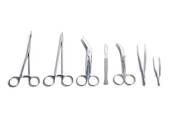
What Is a Surgical Knife?

What Is a Surgical Knife?
A surgical knife, also called a scalpel, is a small bladed instrument used to make incisions during medical or scientific procedures such as surgeries, biopsies, and dissections. Variations of such knives are also used by craftsmen and artists because they are highly effective for precision cuts on or through many different surfaces. The blade of a surgical knife must be incredibly sharp because such knives need to slice through skin and other tissues with a high degree of precision. Surgical knives are usually made of high-quality tempered steel, though more expensive, higher-quality materials are also used on occasion. Just as there are many different uses for the surgical knife, there are many different kinds of surgical knives. Many have reusable handles and replaceable blades so that one does not need to replace the whole knife when the blade gets dull. There are also many different designs for the blade of a surgical knife. The most common surgical knives, standard scalpels, have one curved cutting surface that is good for cutting through skin and muscle. Other surgical knives may have double-edged blades, chisel-shaped blades, triangular blades, or many other different kinds of blades based on the specific task for which they are needed. When a surgical knife is actually used for surgery, sterility is a significant concern. In general, a single blade on any bladed instrument used in surgery will only be used once before it is recycled and sterilized. This is true even if the blade is only used for a single, tiny incision. If a blade that is not sterile is used, there is a considerable risk of infection to the individual being cut by the knife. Sterile knives are an essential part of safe and effective surgery. Sometimes, steel surgical knives are unsuitable for surgery. For example, when surgery is is being performed based on an MRI, or magnetic resonance imaging system, the magnets in the MRI would magnetically attract the blade, making surgery difficult or impossible. For this reason, blades made out of nonmagnetic substances are sometimes used in surgery. Alternatively, surgeries can sometimes be conducted through the use of alternate techniques such as electrocautery or laser incision. There are generally two main ways in which a surgeon holds a surgical knife. The palamar grip, which is similar to the way one holds a dinner knife, is effective for long, large cuts. The pencil grip, which is similar to the way most people hold writing instruments, is more effective for small, precise incisions. ---------------------------------------------------------------------------- Surgical knives are usually made of high-quality tempered steel, though more expensive, higher-quality materials are also used on occasion. Just as there are many different uses for the surgical knife, there are many different kinds of surgical knives. Many have reusable handles and replaceable blades so that one does not need to replace the whole knife when the blade gets dull. Unlike metals such as silver, surgical steel will rarely interact with a piercing, reducing the risk of infection, inflammation, and poor healing outcomes. Surgical steel body jewelry is often inserted at the time of piercing to promote healthy healing, and surgical steel is the metal of choice for implants used in body modification, thanks to its low reactivity. In all, there are 67 different types of scalpel blades and 27 different types of handles, although not all of these types are for medical purposes. In general, surgical scalpels are individually designed for specific types of surgery # Disposable surgical scalpels usually are single-piece, often come with plastic handles and have retractable blades, much like a utility knife. The entire scalpel is thrown away after just one use. Surgical blades and handles alike are commonly identified by a number. Some handles are designed to fit a specific hand hold. # If this procedure is done in a sterile and closed environment, the skin would first be sterilized, and the skin would then be anesthetized. The incision would be performed using a surgical blade, clamps would hold the airway open, a tracheotomy tube would be inserted, and the patient would be ventilated with a bag valve unit. http://www.wisegeek.com/what-is-a-surgical-knife.htm

Friday, 1 June 2012

The Argan Oil Secret to Beauty

The Argan Oil Secret to Beauty

Argan oil has a myriad of benefits for beauty.
Argan oil is an antioxidant– known as nature’s answer to botox, it is a Vitamin C and E packed oil perfect for combating free-radicals and works as an anti-aging.
Softens dry skin – Argan oils high concentration of vitamin E and essential fatty acids alleviates skin complications like dry skin or dry patches.
Reduces the appearance of wrinkles–Applying under the eye results in the reduced appearance of crinkly lines under the eye.
Reduces skin imperfections – with regular use Argan oil for skin has been shown to heal acne blemishes and prevent new breakouts.
Now that all of the issues in regards to Argan oil claims as the secret to beauty and for general health have been explored its time to decide if the Argan oil benefits outweigh any skepticism you may have about it. Various studies have been conducted since Argan oils worldwide debut and it’s clear that Argan oil is one of nature’s natural health wonders.
If you are looking to acquire Argan oil, do your research and order from a trusted source. Since the recommendation of Oprah and others have caused such an interest in Argan Oil there have been many jumping on the Argan Oil bandwagon and pushing questionable products with only a small percentage of 100% pure Moroccan Argan Oil in their product.
Pure organic Argan oil isn’t cheap, so if you see cheap prices… there is a strong chance the product isn’t 100% pure organic – but mixed with a bunch of chemical additives.
In either event, ordering from a company that has experience and guaranteed products is a sure fire method of obtaining your little piece of ‘Liquid Gold’ via Argan Oil.

http://www.reinventingaging.org/skin-care/argan-oil/argan-oil/

Wednesday, 28 March 2012

Jane Seabrook Illustration

Jane Seabrook Illustration

JANE SEABROOK is an illustrator and designer who lives in Auckland, New Zealand. In recent years, her artwork has focused on paintings of wildlife for the Fury Logic series of books. She shares her life with her husband, two teenage children, and a growing menagerie of assorted animals. Following are some excerpts from her Fury Logic books.


There's always a lot to be thankful for if you take time to look for it. For example, I am sitting here thinking how nice it is that wrinkles don't hurt...